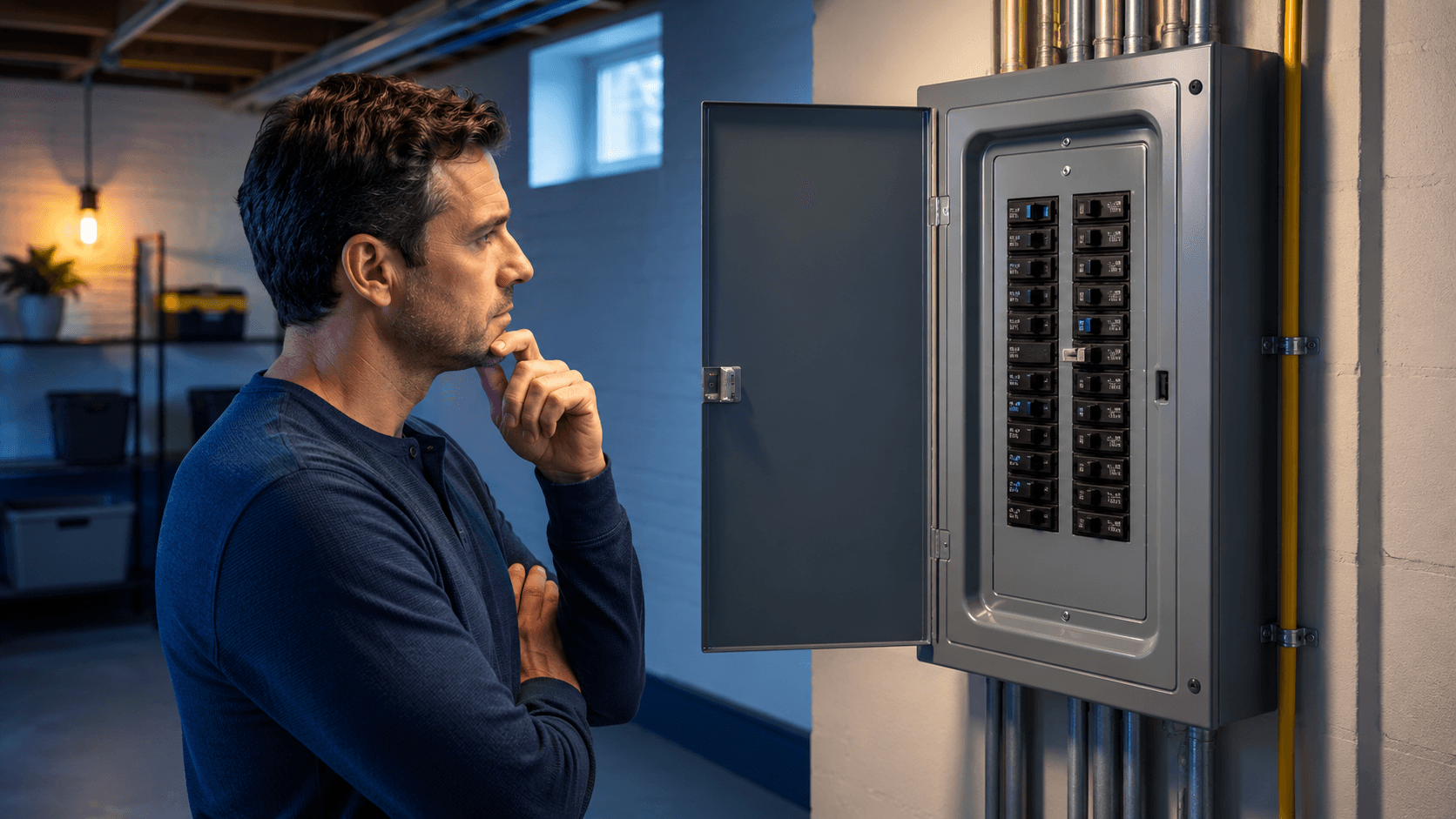
A circuit breaker that trips occasionally may simply be doing its job. But if the same breaker keeps shutting off—or will not stay on—it is warning you that something in the electrical system needs attention.
Circuit breakers are safety devices. They interrupt the flow of electricity when a circuit becomes overloaded or when another potentially dangerous electrical condition is detected. Repeatedly resetting a breaker without identifying the cause can allow a small problem to become a much larger one.
Common Reasons a Breaker Trips
1. The Circuit Is Overloaded
An overload occurs when too many electrical devices are drawing power from the same circuit.
This often happens when several high-demand appliances are used at the same time. Portable heaters, hair dryers, kettles, microwaves and air conditioners can all place significant demand on a circuit.
The breaker trips before the wiring becomes dangerously overheated.
If the breaker only trips when several devices are operating, unplugging or moving one of them to another circuit may solve the immediate problem. Frequent overloads, however, can indicate that your home does not have enough dedicated circuits for the way the space is being used.
2. An Appliance Is Faulty
Sometimes the problem is not the circuit—it is something plugged into it.
A damaged cord, aging appliance or malfunctioning power supply can cause a breaker to trip whenever that particular device is used.
If the breaker trips shortly after one appliance is turned on, stop using that appliance until it can be inspected, repaired or replaced.
3. There Is a Short Circuit
A short circuit occurs when electrical current travels along an unintended path. This can create a sudden surge of current and cause the breaker to trip immediately.
Possible warning signs include:
- A breaker that trips immediately after being reset
- A burning smell
- Buzzing or crackling sounds
- Discolouration around an outlet or switch
- Heat coming from an electrical device, outlet or panel
Short circuits can occur inside appliances, receptacles, switches, junction boxes or electrical wiring. They should be investigated by a qualified electrician.
4. A Ground Fault Has Occurred
A ground fault happens when electricity escapes its intended path and flows toward the ground. This is especially concerning in areas where electricity and moisture may be present, including kitchens, bathrooms, garages and outdoor spaces.
Ground-fault circuit interrupters—commonly called GFCIs—are designed to shut off power very quickly when this type of fault is detected.
If a GFCI receptacle or breaker repeatedly trips, there may be moisture, damaged equipment or another electrical fault that requires attention.
5. The Breaker May Be Worn or Damaged
Circuit breakers do not last forever. Age, heat, corrosion, loose connections and repeated tripping can affect their performance.
A breaker that feels unusually hot, will not reset, feels loose or trips without an obvious cause may need to be inspected or replaced.
The electrical panel should only be opened or repaired by a qualified electrician. Replacing a breaker is not simply a matter of finding one that fits—the breaker must be approved for that particular panel and correctly matched to the circuit.
Is It Safe to Reset a Tripped Breaker?
If there are no signs of heat, smoke, damage or burning, you can turn off or unplug the devices on that circuit and attempt one reset.
Move the breaker fully to the OFF position before switching it back to ON.
If it trips again, leave it off. Repeatedly resetting it does not fix the underlying problem and may create an unnecessary safety risk.
Never attempt to hold a breaker in position or prevent it from tripping.
When Should You Call an Electrician?
Contact a qualified electrician if:
- The same breaker trips repeatedly
- The breaker trips immediately after resetting
- You smell something burning
- An outlet, switch or breaker feels warm or hot
- You hear buzzing, sizzling or crackling
- You see sparks, scorch marks or discolouration
- Lights flicker or dim when appliances start
- The electrical panel is damaged, corroded or unusually warm
- You cannot identify what is causing the problem
If there is smoke, visible arcing or an active electrical fire, leave the area and call emergency services.
Your Breaker Is Giving You a Warning
A tripped breaker can be inconvenient, but it is also one of the ways your electrical system protects your home.
If it keeps happening, do not ignore it or simply continue resetting the breaker. Finding the cause can prevent damaged equipment, overheated wiring and more serious electrical hazards.
Excalibur Electric provides professional electrical troubleshooting, repairs, panel upgrades and safety inspections throughout Mission and the Fraser Valley.
If a breaker in your home keeps tripping, contact us to have the circuit properly assessed.
Call Excalibur Electric at 604-200-0797 or use our online contact form to request service.